
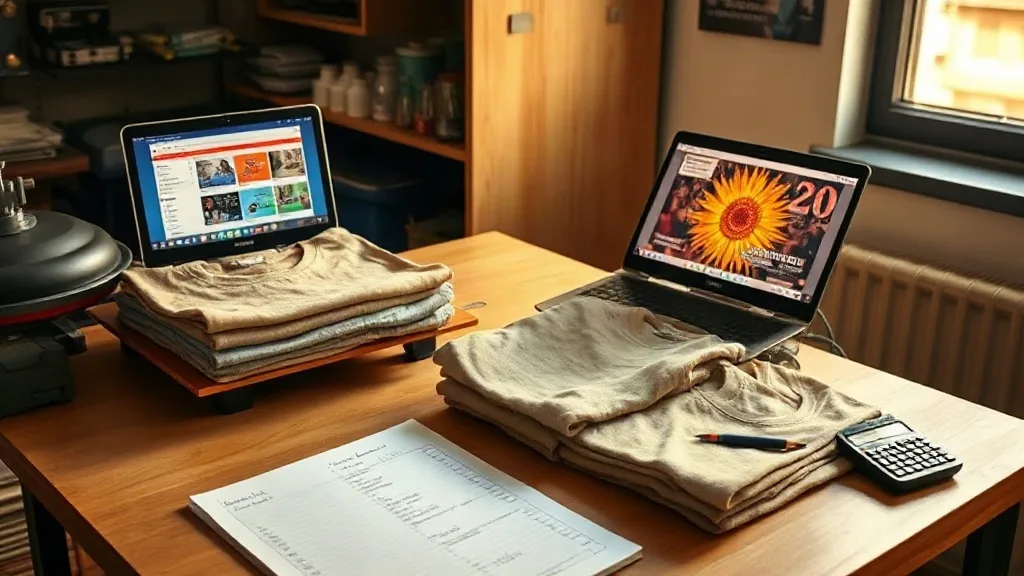
Most print shops that add shaka wear blanks to their lineup figure out the printing part quickly. The harder puzzle is pricing. You know the blank costs one number and the transfer costs another, but somewhere between a supplier invoice and a customer quote, margins quietly disappear. This piece is about the money side: how to build a cost model you can trust, where hidden expenses hide, and how to set prices that survive a busy season without turning your shop into a charity.
Start With a True Cost Per Shirt, Not a Guess
Every pricing conversation should begin with a single number: what does one finished, printed shirt actually cost you? Not the blank. Not the transfer. The whole thing, including the parts that never make it onto an invoice.
Here is a working model I use when quoting DTF jobs. Adjust the figures to your own suppliers, but keep the categories intact.
- Blank cost: the wholesale price of the shaka wear tee, hoodie, or tank.
- Transfer cost: ink, film, and powder consumed by the print, measured per square inch or per gangsheet slot.
- Labor: design prep, gangsheet layout, pressing time, folding, and bagging.
- Waste allowance: misprints, mispresses, and the occasional ruined blank.
- Overhead share: electricity, heat press depreciation, software, and rent divided across monthly output.
A common mistake is treating labor as free because the owner does the pressing. It is not free. If you would have to pay someone to do it, it belongs in the cost model. A realistic shop often lands between 8 and 15 percent of the retail price on labor alone for single-piece work, and less on volume runs where pressing is batched efficiently.
Why Waste Deserves Its Own Line
New press operators underestimate waste. A cold press, a misaligned film, or a shirt that shifted under the platen all produce a blank you cannot sell. On a small run of twenty shirts, one or two losses are normal. If your price assumes zero waste, that loss comes straight out of your margin. Build a waste factor of roughly 3 to 7 percent into every quote, higher for complex multi-color designs and lower for simple one-color chest prints.
Where DTF Changes the Pricing Math
DTF is unusual because setup cost is almost nothing compared to screen printing. There is no screen to burn, no color separation, no minimum order of thirty-six pieces. That flexibility is a pricing advantage, but it also tempts shops into underpricing. Customers who used to pay setup fees now expect one-off prints at volume prices.
The counterweight is the DTF Gangsheet Builder. When you fill a gangsheet efficiently, your transfer cost per design drops noticeably because you are paying for film length rather than per-image setup. That savings is real, and it should show up in your cost model. If you are still pricing single transfers as if every job required a fresh sheet, you are quoting above what your actual production cost supports, and a sharper competitor will undercut you.
A Simple Gangsheet Efficiency Check
Before quoting a multi-design order, lay out the artwork in your builder and look at the leftover space. A sheet that is 60 percent full means you are absorbing 40 percent of the film cost as pure overhead. Rearranging sizes and rotating small logos into gaps often pushes utilization past 85 percent, which can shave a meaningful amount off the transfer cost of each piece. Do this before you send the quote, not after.
Setting Retail Prices That Hold Up
Once you know your true cost, the retail price becomes a decision rather than a guess. Two rules keep shops out of trouble.
- Target a gross margin, not a markup. A 2x markup on a ten dollar cost gives you a twenty dollar price, which is a 50 percent gross margin. Know which number you are aiming for and be consistent.
- Price the category, not just the shirt. A basic tee, a heavyweight tee, and a hoodie each carry different expectations. Customers comparing your hoodie to a big-box store are not your customer. Customers comparing it to other custom shops are, so benchmark against custom work.
For DTF-printed shaka wear blanks, many shops find a comfortable zone by pricing tees in the low-to-mid twenties for single pieces, with discounts kicking in around a dozen units. Hoodies and heavier garments naturally sit higher. These are not universal numbers, but they illustrate the shape of a healthy ladder: a fair single-piece price, a modest volume discount, and a floor you never cross.
Protect the Floor Price
Write down the lowest price you will accept for each garment type, calculated from your true cost plus a minimum acceptable margin. Tape it inside a drawer or keep it in your quoting sheet. When a customer pushes for a discount on a fifty-piece order, you already know how far you can go. Shops that improvise discounts under pressure usually discover the mistake weeks later when the profit and loss statement arrives.
Quoting Multi-Piece Orders Without Losing Money
Volume orders feel like a win and can quietly become the least profitable work in the shop. Three habits keep them healthy.
First, quote from a per-piece cost that reflects batch efficiency, not single-piece cost. Pressing twenty shirts in a row is faster per unit than pressing one. Second, separate design work from production in your quote. If a customer needs six revisions before approving artwork, that time has a cost, and it should not be buried in the per-shirt price. Third, set clear terms on size breakdowns. A run that suddenly includes five extended sizes can wipe out your margin if you priced everything as a standard tee.
Common Pricing Mistakes in DTF Apparel
- Forgetting to charge for design setup on custom artwork.
- Ignoring shipping and receiving time on blank restocks.
- Quoting from memory instead of a written cost sheet.
- Discounting before checking gangsheet utilization.
- Treating press labor as free because the owner does it.
Each of these is small on its own. Together they explain why two shops with identical equipment and identical suppliers can end up with very different profit levels at year end.
Frequently Asked Questions
How much should I charge for a DTF-printed t-shirt?
There is no single correct figure, but a workable approach is to calculate your true cost per shirt, then apply a gross margin target of at least 45 to 55 percent for single pieces. On shaka wear blanks with a standard front print, that often lands in the low-to-mid twenties for retail, with volume discounts applied only after you confirm gangsheet efficiency.
Is DTF cheaper than screen printing for small orders?
Almost always, yes. Screen printing carries setup costs for each color and usually requires a minimum order. DTF has no screen setup and no color minimum, so for runs under roughly two dozen pieces it is typically the lower-cost option. At very high volumes, screen printing can become cheaper per unit, so it is worth comparing once orders grow.
How do I account for waste when pricing DTF jobs?
Add a waste factor of about 3 to 7 percent to your per-piece cost. Track your actual misprints for a month and use that real number rather than an estimate. Complex multi-color designs and jobs with many small pieces tend to run higher.
Should I charge extra for extended sizes?
Yes, if your blank supplier charges more for them, which most do. Pass that difference through clearly on the quote rather than averaging it across the order. Customers generally accept a stated size upcharge; they do not accept discovering it after the invoice.
Can I raise prices after I have regular customers?
You can, and sometimes you should. Give existing customers advance notice, explain the reason briefly if it is material costs, and honor any quotes already issued. Shops that communicate clearly usually keep their regulars through a modest increase.
Pricing is not the glamorous part of running a DTF shop, but it is the part that decides whether the shop is still there in three years. Build the cost model once, keep it current, and let it do the arguing for you.