
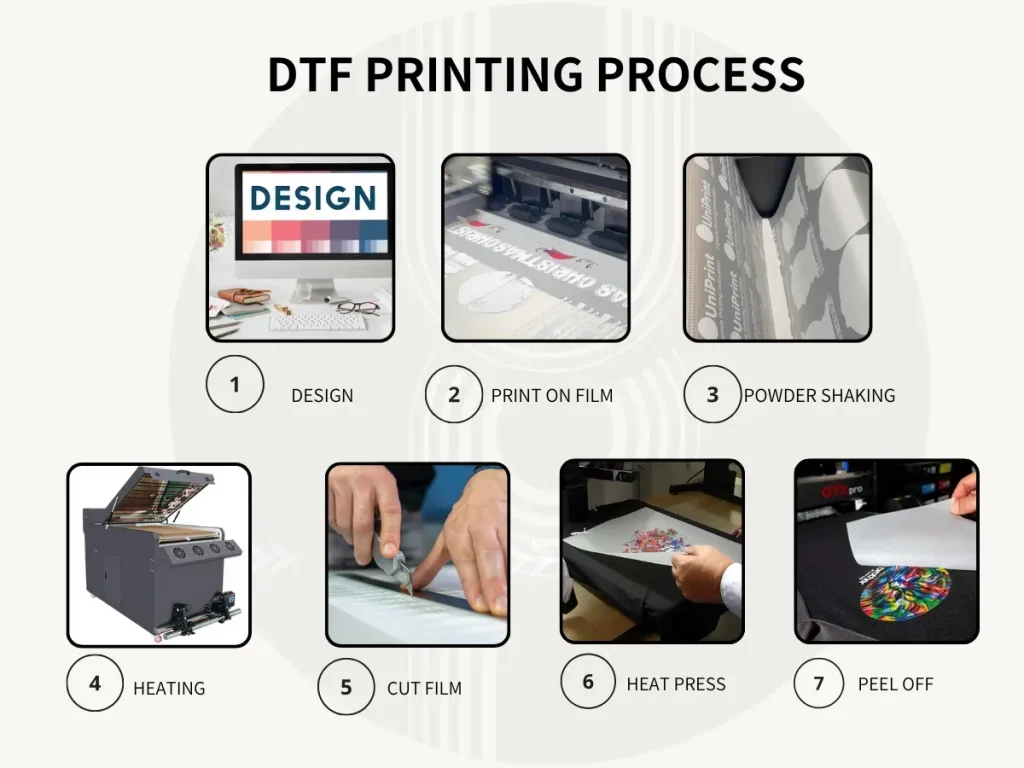
DTF Printing has emerged as a versatile and scalable option for turning creative ideas into wearable art on textiles, attracting small brands, makers, and designers who want vibrant results without the constraints of traditional methods. The DTF transfer process blends ease of use with compatibility across diverse fabrics, delivering bright, durable prints that hold up under washing, with inks, films, and powders engineered to work together. For creators, a reliable printer setup includes a robust DTF printer and compatible film stock, plus a streamlined workflow that translates art from screen or vector into crisp, flexible results. When evaluating printing options for small runs, many designers weigh color fidelity, durability, setup time, and cost, choosing the method that best fits their fabrics and audience. With the basics in hand, this guide helps you plan your workflow, select compatible components, and optimize your results for online showrooms and customers across markets worldwide today.
DTF Printing Explained: What Direct-to-Film Is and Why It Matters
DTF Printing combines a transparent film carrier with pigment inks to transfer designs onto textiles. This Direct-to-Film approach sits between screen printing and DTG, offering versatility and scalability for a wide range of projects.
Using a DTF printer to print on PET film, the ink is bonded to fabric with heat and an adhesive powder, producing vibrant color, good stretch, and compatibility across cotton, polyester, blends, and even some non-apparel items. Compared with traditional screen printing and DTG, DTF prints on textiles can be more cost-effective for smaller runs and easier to scale.
DTF Printer Setups: Choosing the Right Equipment for Consistent Results
Selecting a reliable DTF printer and ink system is critical for achieving consistent, professional results. Look for a system designed for DTF, with a robust ink setup that resists clogging and supports vibrant color reproduction.
Pair it with compatible DTF film, adhesive powder, and a heat press with even heat distribution. Software for design, color management, and RIP options helps maintain accuracy, while regular maintenance keeps your DTF prints on textiles looking sharp over time.
The DTF Transfer Process Demystified: From Design to Durable Prints
The DTF transfer process starts with design and color management, then printing onto the PET film with appropriate inks. After printing, an adhesive powder is applied, cured, and prepared as a ready-to-transfer film.
During the transfer, the film is placed onto the fabric and heat pressed at the recommended temperature, time, and pressure. The carrier is peeled away after cooling, leaving a crisp, durable print on the fabric. This sequence is central to achieving strong adhesion and consistent color fidelity.
Producing Vibrant DTF Prints on a Range of Textiles
DTF prints on textiles are versatile across fabrics including cotton, polyester, blends, and even items beyond clothing. The film-based transfer locks in color with good stretch and wash durability.
Testing swatches on different fabrics helps gauge color accuracy and adhesion before running larger batches, ensuring predictable results for brands or personal projects across various textiles.
DTF vs Screen Printing: When to Choose Each Method
DTF printing offers flexibility between DTG and traditional screen printing, with lower minimums for small runs and strong color on diverse fabrics. For high-volume orders on cotton, screen printing can still be efficient, while DTF simplifies setups for multi-color designs.
When deciding between DTF, DTG, or screen printing, consider fabric type, design complexity, and budget. The DTF transfer process is often preferred for mixed-fabric batches and quick turnarounds, whereas screen printing may shine on very large runs with simple color palettes.
Troubleshooting and Maintenance for Long-Lasting DTF Production
Even the best DTF setup can experience issues like cracking, peeling, white flecks, or color shifts. Common causes include improper curing, insufficient adhesion, powder clumping, or mismanaged color profiles.
Preventive maintenance—calibrating printers, using ICC profiles tuned to fabrics, storing adhesive powder properly, cleaning nozzles, and routine maintenance of the heat press—helps keep DTF prints on textiles looking sharp and durable, extending equipment life and maintaining color consistency.
Frequently Asked Questions
What is DTF Printing and how does the DTF transfer process work?
DTF Printing is a Direct-to-Film method that uses a transparent PET film to carry ink onto textiles. The DTF transfer process typically involves designing for the substrate, printing the artwork onto the DTF film, applying an adhesive powder, curing it, and pressing the film onto fabric with heat and pressure. This results in vibrant, durable prints and is commonly referred to as Direct-to-Film or DTF prints on textiles.
What should I look for in a DTF printer to ensure quality?
When choosing a DTF printer, look for a reliable ink system designed for DTF, strong color reproduction, and compatibility with your chosen DTF film and adhesive powder. Consider easy maintenance, available spare parts, and solid RIP software. Also compare options with DTG or screen-print workflows to match your run size and fabric types.
Are DTF prints on textiles durable and wash-friendly?
Yes, when the adhesive powder is cured correctly and the heat-press is properly set, DTF prints on textiles can be durable and comfortable to wear. For washing, advise customers to turn garments inside out, use cold water and mild detergents, and avoid harsh agitators to extend print life.
Can DTF Printing be used on different fabrics beyond cotton?
DTF prints on textiles are versatile and work on cotton, polyester, blends, and many non-apparel materials. It’s important to test color accuracy and adhesion on swatches for each fabric, as performance can vary between substrates.
How does DTF transfer compare to screen printing for small runs?
DTF transfer process is favorable for small runs due to lower setup costs and quicker turnaround, with the ability to print detailed, multi-color designs on a wide range of fabrics. Traditional screen printing can be more cost-efficient for large volumes, but requires longer setup and higher minimums.
What are common issues and troubleshooting tips for the DTF transfer process?
Common issues include cracking or peeling from insufficient curing, white flecks from powder clumping, color shifts from weak color management, and film tearing from excessive heat. Troubleshoot by adjusting curing time and temperature, ensuring even powder distribution, using calibrated ICC profiles, and verifying correct heat press temperature, time, and pressure.
| Feature | Key Point |
|---|---|
| Definition & Concept | DTF Printing uses a transparent PET film as a carrier to transfer pigment onto fabrics, delivering vibrant color, good stretch, and broad fabric compatibility (cotton, polyester, blends, and more). |
| How It Works | A pigment is printed onto a DTF film, adhesive powder is applied, the powder is cured, and the film is pressed onto the fabric to transfer the design. This yields a high-quality print with strong color and durability. |
| Basic Workflow | Design with color management; print on DTF film; apply adhesive powder; cure; place film on fabric and press; peel off carrier after cooling to reveal the transfer. |
| Equipment & Materials | DTF printer with compatible inks; DTF film and release liner; adhesive powder; heat press; design software; cleaning/maintenance tools. |
| Printer & Supplies Selection | Choose reliable print quality, robust DTF ink system, compatible film and powder, uniform heat press, and available support/resources; test on swatches for color accuracy and adhesion. |
| Maintenance & Quality | Regular calibration, color management, swatch testing, powder storage to prevent clumps, clean film stock, and a clean workspace to avoid contamination; provide proper wash-care guidance for customers. |
| Troubleshooting & Comparisons | Common issues include cracking, white flecks, fading, or film tearing; fixes involve adjusting curing time/temperature, powder distribution, color profiles, and alignment; DTF sits between DTG and screen printing in flexibility and cost. |
| Future Trends | Improvements in inks, films, and powders; better white ink capabilities; eco-friendly powders; faster transfer times; expanding compatible ecosystems for newcomers. |
Summary
DTF Printing is a versatile and scalable method for transferring designs onto textiles using a PET film carrier, adhesive powder, and heat. The typical workflow includes design, printing onto the film, powder application and curing, and transferring the image to fabric with a heat press. Essential considerations cover equipment, materials, color management, testing on swatches, maintenance, and troubleshooting. Compared to DTG and screen printing, DTF offers strong color fidelity across a broad fabric range with relatively straightforward setup and lower minimums for small runs. With ongoing advancements in inks, films, and powders, DTF Printing is poised for easier adoption and broader application across apparel, bags, and home textiles.